

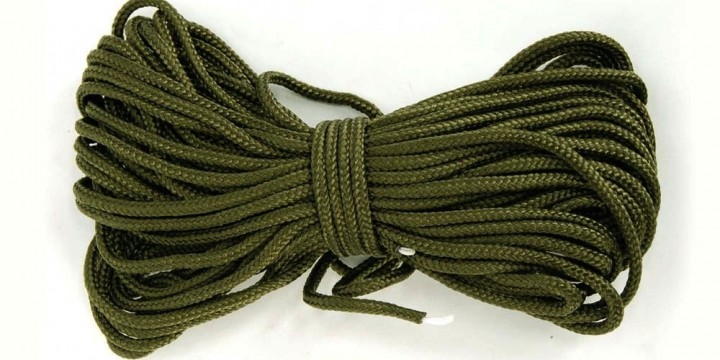
Cordelette for Climbing
Hi Steph,
I’ve been looking to upgrade my cordalette to something a little lighter (always been instructed to use 7mm cord but have always hated the weight and bulk) and am quite confused. Some say a straight up 5mm cord is fine, other say if you want to go that thin it should be the 5.5mm titan dyneema cord, other say just moving to a long spectra or dyneema sling would be best. I’d love to get your opinion/hear what you use.
Thanks!
Max
Hi Max,
Great question! Generally, I don’t use cordelettes, because I don’t like to carry the extra weight. I will use them if I am doing rigging work, and occasionally for big wall use where going light isn’t as big of a deal and it’s worth the trade off in weight for a simple, accessible anchor point. On long routes, I usually keep a light daisy chain girthed to my harness. I use this daisy chain as a preliminary clip in-point while I set up my anchor, which I do with 2 ultralight locking carabiners and a bunny-ears knot made of the climbing rope that I am directly tied into. I know you are probably going, “a WHAT knot?” I will do a post on that knot before too long, I promise.
To answer your question, I checked in with Dave Furman, the hardgoods manager at Mammut and my gear-expert friend. He wrote some great guest posts here already about differences between ropes, and he knows a lot about specs and the more technical capabilities of cordage. Here’s what Dave has to say about cordelettes and rope diameters:
Hey Steph—
People should remember that KN are a measure of force, which is determined not only by the mass of the object lobbing off a cliff, but by the acceleration of the object—in this case a climber. It is very easy for an average-sized climber to generate a lot of force during a fall, especially in circumstances that can cause the belay anchor to be loaded—because we only have one belay anchor in question, no matter the material we should strive to use anchors that are redundant (i.e. if one element fails there is always a backup—this includes the anchoring material), and to protect the anchor by placing protection and by building dynamic elements into the anchor (such as tying into the anchor with your climbing rope rather than clipping directly to a sling or cordellette). These practices are just part of building good anchors and should be a given no matter what the anchor material is.
No anchor-building material is perfect, all of them having tradeoffs between strength, weight, bulk, durability, dynamic properties and versatility. Mammut’s 5 mm accessory cord has a breaking strength of 5.5kn (about 1200lb), 6mm is 7.5kn (about 1700lb) and 7mm 13kn (about 2900lb). Note that the 7mm cord is over 40% stronger than the 6mm, and almost 60% stronger than 5mm. A permanent loop sling such as our 8mm Contact in the “cordellette” length of 240cm is low in weight and bulk, quite strong (22kn, or about 5000lb) but it cant easily be un-knotted for other uses and being much less stretchy than nylon it is important to always use the dynamic climbing rope to tie-in to a belay constructed from this material in order to have some “give” in the anchor. In addition, since any knot will weaken a material, these slings don’t necessarily need to be weakened with a knot in order to build an anchor. Tech cords are pretty low in bulk and can be pretty strong, but many of them have been shown to suffer decreased strength from repeated bending—essentially the knot always in the same place can cause them to fatigue much like a metal does when bent back and forth repeatedly at the same point, so they have a limited lifespan, as well as being essentially static like the Mammut Contact slings. Nylon cord is not as strong—the 5mm size which is most comparable in weight and bulk to a Contact sling or tech cord is far weaker than those alternatives—but it does not fatigue, it is durable, it stretches and provides a dynamic element built right into your belay, and it knots easily and can be used to back up a rappel anchor or make a prussic or other tool in a self-rescue or emergency situation. Climbers should be aware of all of the strengths and weaknesses of all of these materials when choosing between them, and construct their anchors accordingly. Although some climbers may use cord thinner than 7mm for constructing belay anchors, it is important to note just how much stronger the slings and 7mm cord are in comparison, especially when you consider that these are often weakened by knotting them and by concentrated wear at the knots. We definitely do not advise people to use 5 and 6mm cord for anchor construction, and if climbers choose to do so they should be acutely aware that they are putting themselves at extra risk by doing so and take any necessary precautions (frequent wear-checks, being extra conservative in deciding what is worn and discarding it, always placing protection specifically to protect the belay from high impact, using a dynamic belay device and techniques, terrain and belay location choices, etc). A calculated risk may be acceptable to some people if it is truly calculated, but done out of ignorance or by guesswork it is asking for trouble. Because most people aren’t willing or able to objectively test these out for themselves to see what their true level of safety (or lack thereof) is, if a nylon cord is used I’d strongly recommend using 7mm for anchor construction, and if the weight and bulk is a significant problem using a Contact sling with a 22kn breaking strength, remembering to tie into the anchor with the rope.
Dave Furman
Hardgoods Category Manager
Mammut Sports Group, USA and Canada






Great post, I always use a cordelette and wondered why it was 7mm nylon rope, now I know.
I love to hear experienced climbers say they don’t use cordelettes. I’ve been at it 40 yrs., including 9 yrs guiding, and 200+ fa’s, and have never seen the reason to add such a time consuming, bulky item to a rack.
Yes, keep the great questions coming!
But I do like them for big walling and rigging.
I totally understand why you’d prefer to leave the cordelette at home, but just curious – how much do you think it’s just a matter of route selection? I’ve found they’re so convenient for anchoring in places like Yosemite and the Sierras for slinging large boulders or trees. I also feel they’re pretty fast for three piece anchors, though I realize you could just as easily rig something with a couple runners. It’s also a good amount of general purpose cord you have on you in case of an emergency.
You and Steph have both probably seen it all though, so I guess I wouldn’t mind hearing a bit more convincing to try dropping them for a while.
Hi Sean,
I think like everything it’s a trade-off. The pros of cordelettes are convenience and versatility. The cons are added weight and time. So in my case, I’ll sacrifice the weight and time in situations where the convenience and versatility are enough to make it worth it, and vice versa. Just in reference to Dave’s comment, I do use cordelettes, just not in all climbing situations. We have lots of tools, and it’s good to choose the best tool for the job, at least in line with what your preferences are or what the particular job is 🙂
Cool post, I can never hear too much about all the different materials available for anchor building and the trade-offs you make in choosing one over the other. I think most people rather hear about clean cut rules because it’s easier and having things black/white makes you feel safe. However, if you read carefully, Dave at Mammut mentions several fundamentals that will turn “it depends” into if and then statements when applied in the field.
There is a consideration that I don’t get:
If all the climbing gear that is used, like dynamic ropes, slings, locking biners,… is rated at full strength (+21KN) during your climb, why do people use a merely 6-12KN cordelette as anchor building material?
When a climber falls, the stretch of the climbing rope may prevent shockloading, but nevertheless will all this force in a delayed matter be transferred to the anchor.
So why trusting an anchor build with a cord that has merely a 6KN breaking strength?
Perhaps for the same reason that people belay and rappel off a single, bartacked loop on their harness with a single locking biner…..
But personally, I generally prefer using the rope for my anchor.
The dynamic rope stretches and removes kinetic energy from the system, which reduces the *peak* force on the anchor. The force isn’t so much “delayed” as it is smeared out over a longer period of time; it’s a smaller magnitude force for longer, rather than one quick jerk of very high force. That’s why we use dynamic ropes — to reduce (peak) fall forces on the falling climber and on the anchor/belay. Intuitively it is obvious that the dynamic rope protects the climber, but in the exact same way it protects the anchors and belay.
A lot of trad protection is not rated to 20+ kN strength. Many nuts, hexes, and cams are rated to only 10 kN, or even 6 kN. So if your protection is going to hold, the cordelette should be strong enough. Of course, as Steph points out, the rope will be much stronger.
thanks both: also, when using a cordelette, you end up with 3 separate and equal points, spreading out the load.
Remember, when you create a loop of the 7mm cord with a fisherman’s knot or similar, you will always weigh at least two strands of the cord, effectively doubling the total strength. So a loop of 7mm 13KN cord will hold a total of 26KN. A loop of 6mm 7.5KN will hold 15KN.
Okay, so I have to know… what is a “bunny-ear knot?”
And now I’m super curious about how you build your belay station: anchors, gear, and all.
http://www.youtube.com/watch?v=8LjeoFUSCb4
[…] Steph, yet another informative piece. I have one problem though, with something that was added to the comments at the end of the […]
This is a great article…I also wonder what would happen if someone slings a boulder with a sharp edge using a 5mm nylon cord, with the bouncing on rap, it would maybe cut like butter? I don’t use correlates but I know it’s sort of a “standard” for beginning climbers, which makes me even worry more that people are suggesting to use 5mm nylon out there!
The main reason I don’t use these unless there are bolts is because I try to always anchor off of 3 points. I know that 2 bomber placements are good enough, but it’s been so engrained into me that i need 3 points. Yes you could equalize two of the three with a runner and still use this knot, but I guess my question is, how comfortable are you with using two placements as an anchor?
Hi Ben, if the anchor is 2 bolts (as often the case on a route with fixed anchors), 2 is all you get. If you’re making your own gear anchor, you can use the bunnyears knot to anchor in with the rope and use a separate sling or daisy to add the third.
[…] 7mm cord, commonly used in cordelettes and alpine rap anchors, is somewhere around 2,900 pounds (cordelettes). All this strength diminishes with exposure to the sun and to weather, to exposure. And […]
Great info to know! Thanks for sharing.
Annie Semmelroth
http://www.stone-adventures.com
Thanks Steph! I’ve started using them more often now thanks to you.
Like most times, the devil is in the details. This person asked if 5.5 mm “Titan Dyneema cord” (Blue Water makes it) is OK for anchors. The Mammut rep answer with details about Mammut’s 5mm accessory cord. The Titan Dyneema cord is rated at 13.7kN, exceeding Mammut’s 7mm cord. There are always other factors, dynamic properties, sheath durability, etc., but simply going by strength the Titan 5.5 mm Dyneema cord is on par with, or exceeds, most manufacturers 7mm nylon accessory cord.
[…] equalized with 6 mm cordalette and a quick-link. Why someone would turn a 25 kN anchor into a 7.5 kN anchor entirely defies my imagination. We cut the tat and rapped off the bomber, radiused Metolius […]
“Tech cords are pretty low in bulk and can be pretty strong, but many of them have been shown to suffer decreased strength from repeated bending—essentially the knot always in the same place can cause them to fatigue much like a metal does when bent back and forth repeatedly at the same point, so they have a limited lifespan, as well as being essentially static like the Mammut Contact slings.”
the newest option I’ve been playing with recently is the Mammut Magic Sling: these solve a lot of the problems!